
What It Means to Sleep Outside
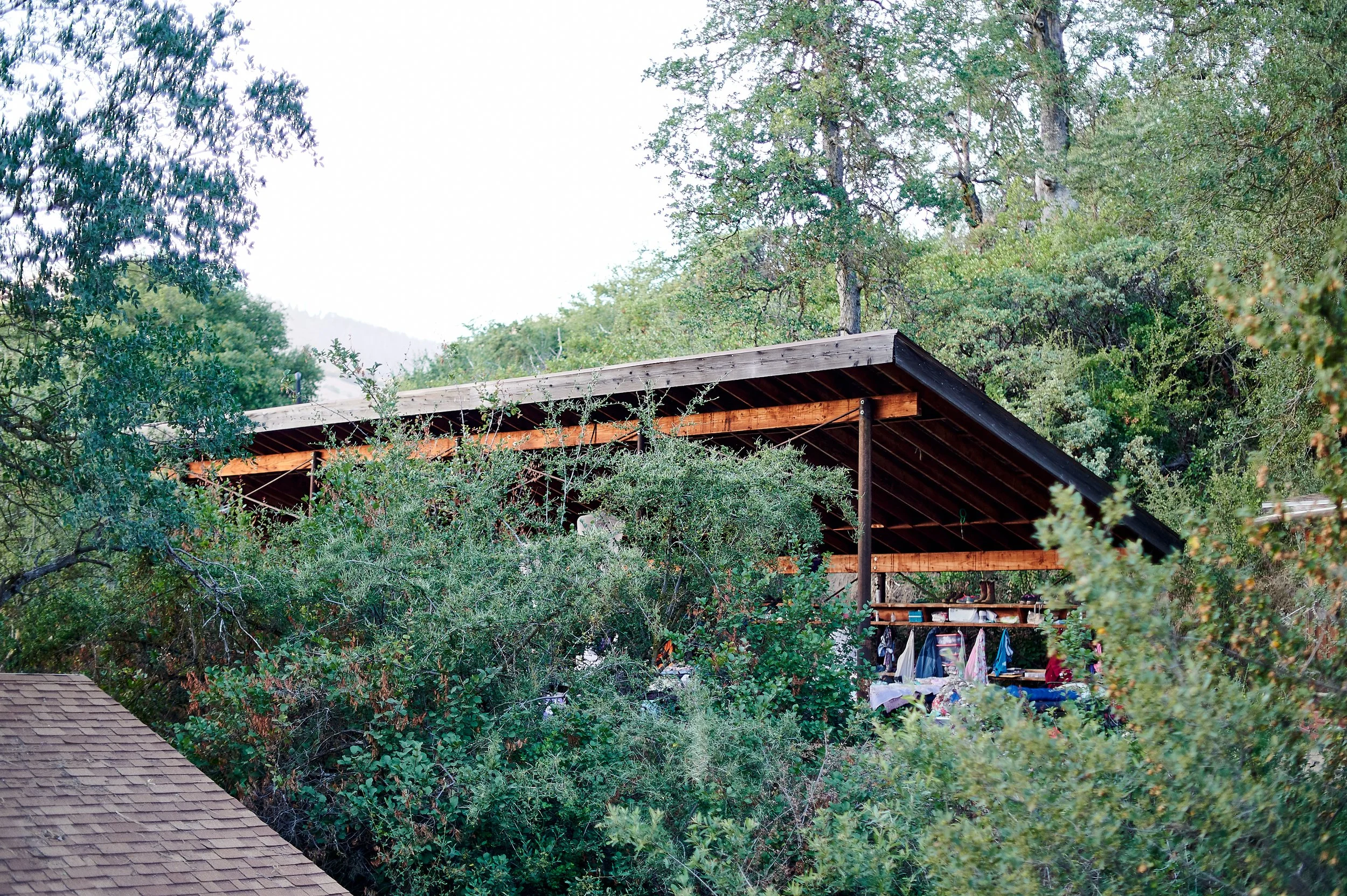
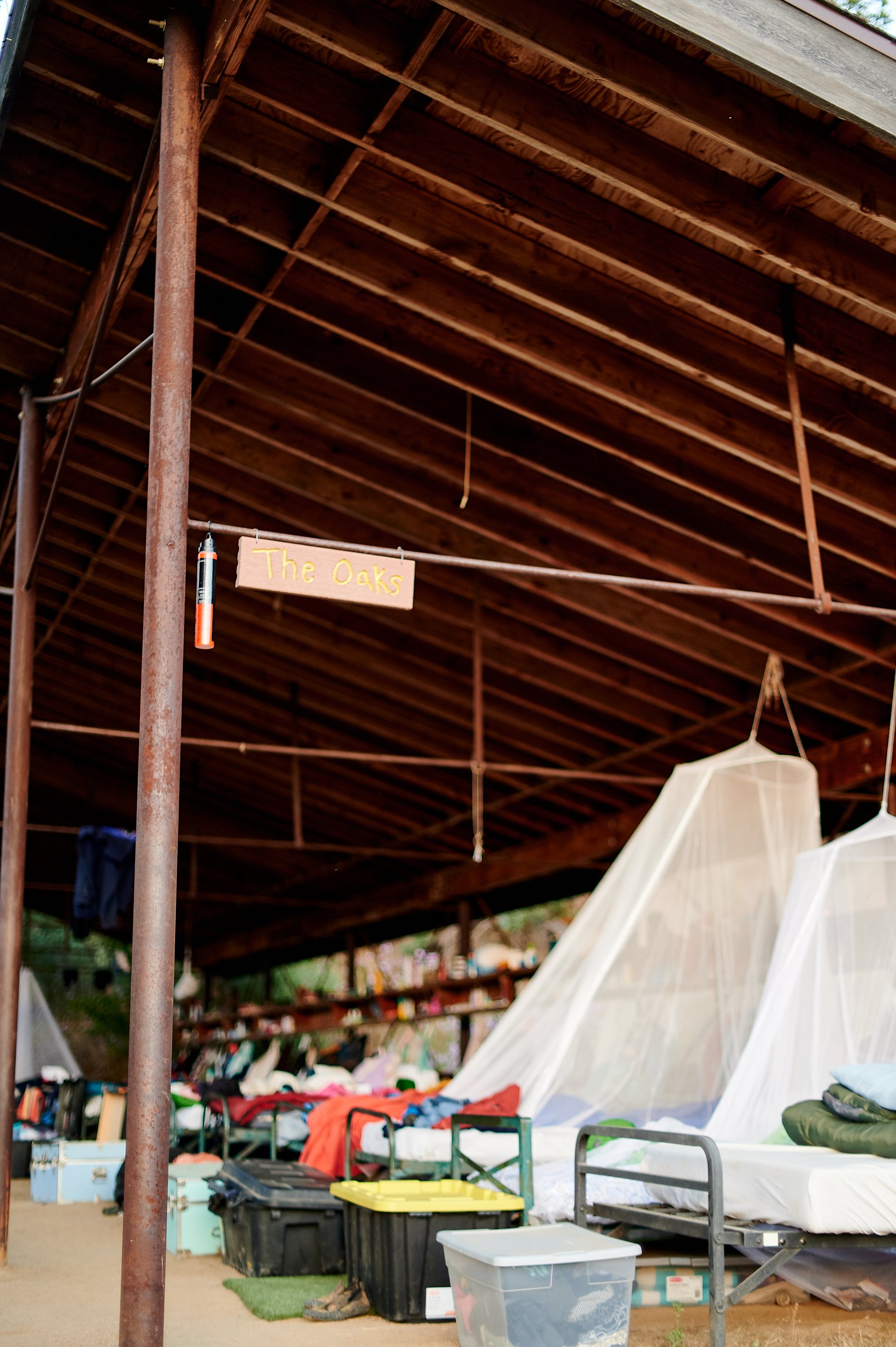
At JRC, everyone sleeps outside. Campers, counselors, and kitchen staff, every person on the property sleeps on open-sided porches with roofs but no walls. There are no enclosed cabins. There is no indoor sleeping.
This is not a design choice in the contemporary sense. It is simply what was built, in the 1930s and 1940s, by people who understood that proximity to the natural world was the point of being here. The oaks, the creek, the night sky, they are not a backdrop. They are part of the program.
Campers fall asleep looking at stars. They wake up to birdsong and Sierra morning light through the trees. The first experience of the day, before breakfast and before chores, is the outdoors and not as something to travel to, but as the world they already inhabit.
The Sleeping Areas
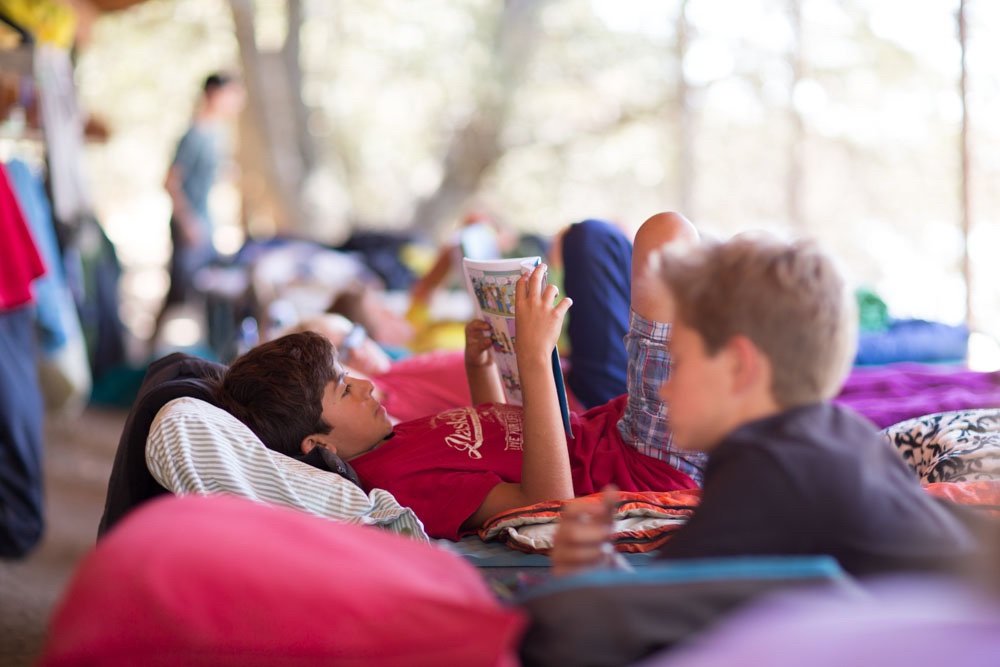
Girls' sleeping areas run youngest to oldest: Brookside, Misty Mountain, Oaks, Woods, and Willows. Boys' sleeping areas are organized the same way: The Roost, Rocky Top Bottom, Rocky Top Top, Lower Eagle's Nest, and Upper Eagle's Nest. Each sleeping area has staff dispersed throughout at a ratio of one counselor to three campers.
The physical design of the sleeping areas reflects JRC's approach to supervision: open sightlines, no enclosed spaces, full staff presence. This is both a safety philosophy and a community philosophy. Privacy exists. Concealment does not.
Campers are grouped by grade and developmental stage, with bunk requests honored where possible. The sleeping area is a community in miniature, and the culture that forms there, the norms that campers and counselors build together in the first days of a session, is one of the most important things that happens at JRC.
The Night Routine
Bedtime at JRC is not a logistics operation. It is relationship time. After Evening Songs at Rose Arbor, groups walk back to their sleeping areas — often stopping at the outhouses along the way, often still talking about whatever the evening brought. Counselors read stories, give hugs, ask about the day. The transition from the social world of camp to quiet is gradual and deliberate.
Lights out comes at the quiet bell. Before then, there is space for the conversations that children do not always have access to: the low-stakes, lateral ones — side by side in the dark, looking up at the same sky — that tend to be where real things get said. The day ends as a guitar-playing director sings to campers as they drift off to sleep.